


Product Lifecycle Management (PLM): From Conception to Product
Scale your engineering with Windchill PLM. Centralize data, ensure traceability, and boost collaboration with OMC GROUP’s expert implementation.
PLM in the industry
What is PLM (Product Lifecycle Management)? The Enterprise Solution for Industry 5.0
Connect workflows, unify multidisciplinary systems, and manage the complete product lifecycle from concept to retirement within a single source of truth.
PLM (Product Lifecycle Management) serves as the strategic backbone for high-performance industries. Beyond standard software, PLM is an enterprise governance framework that integrates people, data, processes, and core business systems. It establishes the vital Digital Thread required to accelerate New Product Development (NPD), eliminate manufacturing defects, and enforce strict regulatory compliance on a global scale.
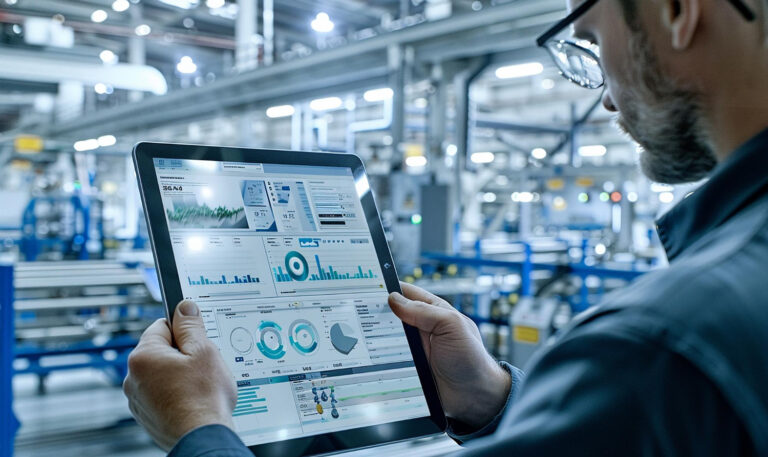
Strategic Pillars of PLM for Industrial ROI Optimization
To navigate dynamic market shifts and complex supply chains, modern enterprises require a robust PLM platform to orchestrate technical intelligence. Centralizing product data delivers measurable competitive advantages:
Accelerated Time-to-Market
Streamline launch cycles by automating the transition between R&D phases, simulation (CAE/FEA), tooling, and the shop floor.
Business Continuity & Risk Mitigation
Eradicate information silos between mechanical (MCAD) and electrical (ECAD) engineering, reducing late, costly engineering change orders (ECO).
Advanced Bill of Materials (BOM) Management
Enforce total traceability by linking product structures seamlessly from initial design (As-Designed) to manufacturing configurations (As-Built).
Data Governance & IP Protection
Implement rigid role-based access controls (Role-Based Access), safeguarding corporate intellectual property against data breaches.
PTC Partner Network
Understanding the Architecture: PDM vs. PLM vs. ERP
Accelerate your industry’s digital maturity by understanding the strategic synergy between core engineering and enterprise management frameworks.
Operating across distinct operational layers, PDM, PLM, and ERP do not compete; they work concurrently to build a seamless digital value chain. While engineering disciplines govern product creation and technical integrity, the enterprise layer orchestrates physical execution and financial operations.
Discover how each technology strategically positions itself within your infrastructure:
| Technology | Core Focus | Operational Scope |
|---|---|---|
|
PDM (Product Data Management) |
Technical design file management, revision control, and CAD data history tracking. |
Isolated within the engineering and product development departments. |
|
PLM (Product Lifecycle Management) |
Lifecycle governance, engineering change management (ECN), quality tracks, and global BOM. |
Multidisciplinary, linking engineering, manufacturing, procurement, and external partners. |
|
ERP (Enterprise Resource Planning) |
Business operations: finance, purchasing, logistics, inventory, and material planning (MRP). |
Enterprise-wide and transactional, driving financial and operational execution. |
The Evolution of PLM: Transitioning to High-Performance Cloud SaaS
Historically, enterprise PLM systems were deployed on-premises due to complex configurations and massive engineering file sizes. With the advancement of high-performance cloud architectures, the industrial sector has permanently shifted toward SaaS PLM (Software as a Service).
Vanguard cloud solutions like Windchill+ operate natively in the cloud to deliver:

Elite Cybersecurity Infrastructure
Proactive vulnerability scanning and continuous penetration testing safeguarding the entire software stack.
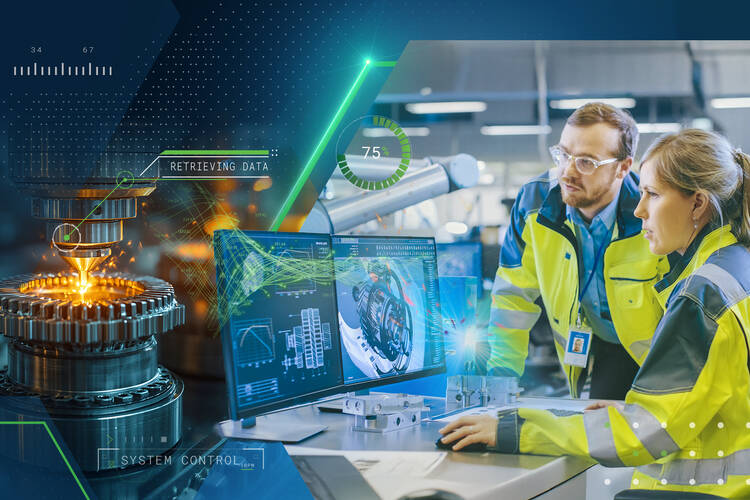
Zero-Downtime Upgrades
Automated update cadences that eliminate operational downtime and remove heavy maintenance burdens from internal IT teams.
Extended Collaboration
Seamlessly onboard trusted suppliers and customers into change-approval loops with complete historical traceability.
Core Resources from PLM Software
Advanced Engineering Capabilities: What Enterprise PLM Must Govern: A robust Product Lifecycle Management (PLM) system goes far beyond data storage. It orchestrates the critical business and technical processes that define industrial efficiency and innovation capacity across four core tracks:
Engineering Data & Change Management
Centralize the complete technical DNA of your products. Automate Engineering Change Orders (ECO) to slash cycle times, enforce rigid history tracking, and eliminate communication gaps across engineering departments.
Multi-CAD Configuration & BOM Management
Dynamically bridge the gap between initial Engineering Bills of Materials (eBOM) and Manufacturing Bills of Materials (mBOM). Unify multi-CAD assemblies within a single, coherent digital product architecture to manage complex configuration variants seamlessly.
Secure Extended Enterprise Collaboration
Safely extend technical governance outside your firewall. Share encrypted product data packages with approved global suppliers and procurement partners, streamlining co-development while strictly safeguarding intellectual property.
Closed-Loop Quality & Regulatory Compliance
Embed Corrective and Preventive Actions (CAPA), non-conformance routing, and proactive risk assessment tracks directly into the active product design phase. Ensure strict validation of global regulatory standards throughout development.
PTC Partner Network
Industrial Connectivity: PLM as the Foundation of the Digital Thread
The Product Lifecycle Management process does not exist in a vacuum. To execute true digital transformation, PLM must serve as the connected architecture of a fully integrated industrial ecosystem. Modern engineering mandates that distinct technical disciplines evolve in absolute harmony.
Our comprehensive engineering deployment bridges vital operational frameworks:
Hardware & Software Synchronization (PLM + ALM): Ensure embedded systems and software developments (ALM) evolve in perfect lockstep with physical hardware configurations (PLM).
Geometric Intelligence (PLM + CAD): Seamless multi-CAD integrations guarantee that updates to 3D virtual mockups automatically update manufacturing data structures down the line.
Process Continuity (PLM + ERP + MES): The PLM engine validates and releases refined product configurations directly to resource planning systems (ERP) and manufacturing execution systems (MES), eradicating data re-entry errors and production scrap.
By leveraging enterprise-grade platform such as PTC Windchill, OMC GROUP designs this cohesive digital framework to ensure your cross-functional teams access the right technical data at the exact moment it is required.
Understand how PLM can help your company
Connect processes, eliminate operational silos, and optimize your company’s development workflows. The Product Lifecycle Management (PLM) approach ensures maximum efficiency across four fundamental pillars.
Reduction of Time-to-Market
Speed up launches by eliminating data errors and rework between engineering and manufacturing.
Operational Efficiency
Reuse existing designs and components to reduce development and inventory costs.
Total Traceability
Data Governance
Protect your intellectual property with role-based access permissions and enterprise-level security.
A PLM-Based Architecture for Discrete Manufacturing
For discrete manufacturers, the digital thread begins in the engineering department. This is where mechanical, electronic, and embedded software component data are linked with full traceability to requirements, simulations, certifications, BOMs (Bills of Materials), process plans, and MBSE (Model-Based Systems Engineering). This data, along with its derivatives, must be leveraged bidirectionally across distributed teams and core systems, including field service, manufacturing, IT, and quality control.




PTC Partner Network
PLM for sustainable engineering
Utilize the digital thread to make design decisions that support your sustainability initiatives. Making good design choices matters because 80% of a product’s environmental impact is determined during the design phase. By combining design and engineering data from PLM with real data coming from the physical world via IoT, engineers can take the environmental impact of the processes and materials used to create the product into consideration. With PLM for sustainable engineering, you can maximize the value you deliver while minimizing the waste.
The Connected Structure of OMC GROUP
PLM is part of an ecosystem. It integrates with and complements other lifecycle management processes. OMC GROUP integrates these disciplines, ensuring that the software (ALM) evolves in perfect synchronicity with the physical product (PLM).
CAD (Computer-Aided Design)
PLM manages and e versiona os arquivos nativos (Creo, SolidWorks, Inventor, NX, Catia, etc.) criando a estrutura de produto.
ALM (Application Lifecycle Management)
PLM integrates with ALM (Codebeamer) to ensure that hardware and software evolve in sync.
IoT (Industrial Internet of Things)
PLM provides the technical definition for the Digital Twin, receiving real-time performance data from the field.
SLM (Service Lifecycle Management)
PLM powers service operations with up-to-date technical manuals and spare parts catalogs.
Components of PLM

BOM Management
Get full digital associativity across engineering, supply chain, manufacturing, sales, and service.

Collaborative Product Development
Manage and execute complex product development projects with collaboration and workflow tools.

Engineering Change Management
Provide built-in governance and traceability for automated, accurate, and coordinated engineering change management.

IP Security
Enable secure collaboration across the value chain by managing IP protection through enterprise digital rights management.

Manufacturing Process Management
Build and manufacture anywhere with a seamless flow of information between engineering and manufacturing.

Model-based systems engineering
Enable collaborative, innovative design and maintenance of complex systems.

Parts Classification
Reduce product complexity and drive down costs with a classification strategy that ensures duplicate parts avoidance and greater reuse.

Product Configuration Management
Minimize the harmful impacts of product complexity by managing product configurations and data with a single source of truth.

Product Data Management
Enable global collaboration across concurrent design environments with a secure, tightly integrated, multi-CAD and product data management system.
Product Variability Management
Manage complex variants and configuration at scale.

Quality Management
Build quality, reliability, safety, and process control into every part of the product lifecycle.

Requirements and Test Management
Create, structure, and validate complex product requirements across the engineering lifecycle.

Service Process Management
Establish a foundation for accurate and accessible service information.

Supply Chain Collaboration
Enable supplier collaboration with IP security so you can share design data and track deliverables to multiple projects around the globe.
PLM solutions for industry innovation
Electronics & High-Tech
The electronics and high-tech industry is a combination of several major sectors that include the manufacturing of advanced technologies, products, and components. With high demand and high volume, all five sectors need a robust PLM strategy to accelerate time to market.
Semiconductors and chips
As critical components to modern technologies, semiconductors face increasing demand and pressure from competition, high-volume contracts, and global supply chains. A modern PLM strategy and robust solution enables teams to work concurrently from a single source of product data. With this increased efficiency, semiconductor companies manage product and supply chain complexity, reduce costs, and improve product quality.
Consumer electronics
In this highly competitive, high-demand industry, leading companies must transform their product development processes, build supply chain resilience, and improve efficiency. Enterprise PLM enables global and cross-functional teams to effectively manage product data, providing a trusted, up-to-date system for product information.
Industrial automation & controls
Manufacturing the automation equipment (control systems, operator interfaces, data acquisition and monitoring systems, motion control components, sensors and actuators) that helps factories run safely and efficiently is complex. PLM manages product complexity, enables component configuration, and supports supply chain agility.
Equipment and infrastructure
Long-life engineered structures and equipment provide the backbone of our communities. By enabling a source of truth for product data with PLM, teams improve collaboration, streamline key processes, and more efficiently meet customer specifications.
Aerospace & Defense
PTC’s PLM solutions empower aerospace and defense manufacturers to streamline product development, ensure compliance, and enable secure, multidisciplinary collaboration.
By establishing a digital thread across engineering, manufacturing, and sustainment, PLM helps teams manage configurations, automate change processes, and maintain traceability across hardware and software systems. With open architecture and IL5-certified SaaS offerings, PTC’s PLM software enables aerospace and defense companies to reduce risk, shorten timelines, and improve quality—ensuring faster development, on-time production and delivery, and mission readiness.
Electronics & High-Tech
Industrial companies face intense pressure from economic cycles, rising costs, and increasing product complexity. Enterprise PLM solutions empower these organizations to modernize data management, optimize operations, and improve cross-functional collaboration. This drives innovation, improves operational efficiency, and positions businesses for long-term success.
Heavy Equipment
Heavy equipment manufacturers operate in a cyclical, low-margin environment where inefficiencies are costly. PLM solutions enable these companies to manage complex product configurations, seamlessly integrate with ERP systems, and improve collaboration between engineering and manufacturing—driving operational efficiency and reducing time to market.
Machinery & Tooling
Machinery and tooling companies require precision and agility to support a wide range of production technologies. PLM solutions support real-time collaboration, leverage model-based definitions, and streamline change management processes. This helps manufacturers reduce errors, improve quality, and accelerate innovation.
Industrial Components
Component manufacturers manage extensive product catalogs and must deliver highly configurable parts to machine builders. PLM solutions provide a single source of truth for product data, enabling efficient design reuse, faster part configuration, and seamless integration with downstream systems to support scalable, high-volume production.
MedTech
As a central repository for all product-related data and documentation, a robust PLM solution reduces the cost of compliance and quality, enhances cross-functional collaboration and organizational efficiency, streamlines processes from design to service, and can accelerate time to market and product innovation for MedTech companies. Key benefits:
- Regulatory Compliance: PLM systems are essential for modern regulatory compliance management and helps maintain and organize critical documentation such as Design History Files (DHFs) and Device Master Records (DMRs), ensuring readiness for audits. PLM tools support key elements for meeting evolving regulatory standards: change tracking, risk management, and full traceability across the product lifecycle.
- Enhanced Efficiency & Innovation: PLM systems streamline product lifecycle management by enabling cross-functional collaboration, centralizing data, and automating workflows. This reduces errors, accelerates time to market, and lowers costs tied to development, manufacturing, and recalls. In regulated environments, PLM ensures efficient, documented change management while supporting design reuse and innovation.
- Digital Transformation & Digital Thread: PLM serves as the backbone for digital transformation in the MedTech industry. It enables seamless integration with tools such as CAD, ALM, SLM, and IoT, supporting the development of smarter, connected devices and strategic insights across the enterprise. It also lays the groundwork for AI-driven innovation by centralizing accurate and up-to-date product data and documentation.
Conheça nossas vastas soluções para PLM
PTC’s Windchill, Windchill+, Arena, and FlexPLM comprise a robust PLM solution portfolio. This digital thread foundation connects product information and processes to speed supply chain collaboration, ensure quality compliance, and drive agile product development processes.
Windchill: Industry-Leading Enterprise PLM
Manage PDM and PLM data with out-of-the-box roles. Optimize your BOM lines and accelerate high-performance engineering.
Windchill+: Global Cloud SaaS PLM Platform
Access cloud PLM with faster speeds, native cybersecurity, and seamless global collaboration for your enterprise.
Arena: Cloud-Native PLM and QMS Solution
Unify quality control and your supply chain tracks. Drive operational agility and minimize overall time-to-market.
FlexPLM: Specialized Retail Lifecycle Tools
Streamline fashion and retail product development with intuitive, visual platforms built for integrated growth.
Explore FlexPLM
PLM on-demand hub: Collaboration across the digital thread
Hear from global leaders like Bosch, Cellcentric, Vestas , and ZF about how they are utilizing the digital thread to connect their network of engineers and non-engineers across the organization.
PLM in the industry
Future of PLM
PLM promotes emerging digital solutions and innovations like artificial intelligence (AI). Best-in-class manufacturers are building on PLM to simplify processes (e.g., change management), automate tasks (e.g., requirements validation), and handle complex business logic (e.g., CAD model optimization). Together PLM and AI will increasingly predict and provide role-specific, contextually relevant product data. AI applications can enhance PLM with generative responses and by solving problems with natural language and localized dialects.

Product lifecycle management (PLM) FAQs
What are the five phases of product development?
The five phases of product development are concept and design, development, production and launch, service and support, and retirement. These phases all depend on PLM furnishing standardized, reliable, and role-specific data—exactly when it’s needed.
Concept and design
During the development phase, engineers optimize the quality and efficiency of initial designs. PLM facilitates real-time collaboration across teams, allowing for efficient, simultaneous work with industrial partners. Cross-functional and partner collaboration significantly reduces the cost of stage-gate transitions as products progress from development to production.
Development
In this highly competitive, high-demand industry, leading companies must transform their product development processes, build supply chain resilience, and improve efficiency. Enterprise PLM enables global and cross-functional teams to effectively manage product data, providing a trusted, up-to-date system for product information.
Production and launch
The shift from design to production is a pivotal phase, requiring manufacturing teams to have real-time access to data created and revised during the design and development phases. Without that data, manufacturers open themselves up to a host of threats; production can grind to a halt, shop-floor technicians may make snap decisions, and quality issues can develop that may not be detected until after products reach the market. PLM ensures a continuity of data between all disciplines, which is indispensable as products transition from development to launch.
Service and support
The service and support phase begins long before products reach the market, with extensive planning—including structures, 3D transformations, and configuration logic. PLM improves how downstream deliverables are created and supports change management continuity between product and service engineering. With the right PLM implementation, even the most immense service supply chains can be optimized, supporting performance-based logistics contracts, and maximizing asset availability and readiness.
Retirement
Companies looking to maximize value mine the product retirement phase for ways to reduce costs, time, and resources. PLM equips the organization with the resources needed to improve end-of-product-life operations. This creates new, transformative ways to advance sustainability and efficiency, which can drive improvements in more traditional business metrics. Organizations that focus on the retirement phase often turn the operational costs of doing business into growth and revenue opportunities.
What are the four stages of the product lifecycle?
Product lifecycles vary significantly, ranging from short (e.g., mobile devices or laptops) to long (e.g., aircraft or naval vessels). Regardless of their total lifespan, all products progress through the same four stages: product development, growth, maturity, and decline. At each stage, PLM can offer benefits that support the overall lifecycle.
Product development
During the product development stage, research and development (R&D) teams work to bring new products to the market as quickly as possible. PLM provides much-needed support to key early-stage tasks (requirements management, ALM/PLM integration, multi-CAD data management, document management, BOM management, change management). Market leaders trust PLM for improved cross-discipline collaboration, efficient innovation, and minimal design changes.
Product growth
During the product growth stage, your operations must have agility to meet market demands. Factories can’t afford disruptions, even as quality and regulatory issues demand immediate resolution. PLM enables collaborative agility to address enterprise change management, closed loop quality, supply chain planning, regulatory compliance, and manufacturing engineering—building blocks needed for rapid product growth.
Product maturity
During the product maturity stage, real-world utilization offers significant opportunities for data gathering; PLM can turn that data into rich, actionable insights. For example, machine learning, IoT, and connectivity can transform support with predictive maintenance. Beyond that, usage data improves R&D’s understanding of how certain features are being utilized, and can direct new advances in performance, quality, and safety. PLM creates a data map that provides traceability between the “as designed,” “as manufactured,” and “as maintained” stages.
Product decline
In the product decline stage, when products are no longer being manufactured and support is scaling back, controlling costs is crucial. Deploying PLM with service lifecycle management (SLM) helps optimize service efficiencies and quality. PLM provides an authoritative source of truth for part and product data, improving technician effectiveness and reducing mean time to repair. With built-in automation and seamless processes, PLM can save hundreds of labor hours per month and reduce spare part costs and supply errors.
How does PLM deliver the digital thread?
The rapid pace of change and complexity in your business can result in siloed teams looking skeptically at product data and processes. That lack of trust amplifies complexity and confusion—which can seriously undercut efforts to be innovative and agile in the marketplace.
Traditionally, distinctions like role, department, geographic location, software, or hardware platforms are reasons why data can’t be shared. But the digital thread makes these distinctions arbitrary—removing barriers and creating opportunities to share and use data in new ways. And all data is treated with accessibility, traceability, and credibility. The result is that you not only empower teams across your organization with more data and insights, but you’ve also increased their trust that the data is accurate and actionable.
PLM provides the foundation needed to deploy your digital thread strategy. PLM maintains the data integrity and builds the confidence you need to keep pace in fast-changing, competitive markets. And PLM integrates with complementary technology (e.g., industrial connectivity, IoT, AI/machine learning) to establish a universal data flow between IT/OT systems—needed to implement the digital thread at full enterprise scale.
How does PLM support digital twins?
A digital twin is a virtual representation of a physical product, process, person, or place that can understand, measure, and even manage its physical counterparts.
PLM brings together the three components of a digital twin: a digital definition of its counterpart, operational/experiential data of that counterpart (gathered from Internet of Things data, real-world telemetry, and beyond), and an information model (dashboards, HMIs, and more) that correlates and presents the data to drive decision making.
A digital twin is much more than a simulation, which is merely a data-driven prediction for how a physical entity will behave. A digital twin spans the full product lifecycle, reflects evolving data, and serves engineering, manufacturing, and service use cases.
How do you manage the product lifecycle?
Managing the product lifecycle effectively requires managing each stage’s data, process, and team needs. It begins with creating a central hub for digital product definition and maintaining comprehensive records of engineering specifications, service procedures, and manufacturing process definitions for each version of every component. This ensures control and understanding of exact product configurations, as well as traceability and governance over all changes throughout a dynamic, evolving product lifecycle.
PLM systems are designed to standardize, automate, and scale this management process, making it data-driven and applicable even in complex environments. Managing the product lifecycle involves different requirements and provides unique benefits to each team. Collectively, this results in significant improvements in efficiency, quality, service, and the overall product lifecycle.
A supply chain leader benefitting from a properly managed product lifecycle will realize resource savings by tapping into the universal data flow between PLM and ERP – eliminating the pitfalls of manual data entry. An engineering lead will experience efficiency gains across their entire organization – enabling them to ramp up capacity and fund more projects. And because product designers are collaborating with advanced planners early in the cycle, they can work together to beat cost targets. Manufacturing teams can move into active production faster with accurate, complete, and up-to-date data. Service leaders are also better prepared – having benefitted from participation in NPI and change processes.
What are some challenges of PLM?
At the senior level, PLM’s impact and value is evident; leaders who see outcomes like shortened change control cycle times don’t need to be sold on the virtues of PLM. But many of PLM’s benefits rest on formalizing processes that originate with engineering teams (such as more sophisticated product definitions). And if the positive impacts of these changes aren’t clearly communicated, engineers will understandably prefer not to add more checkpoints and validation steps or revise familiar workflows. To secure rapid adoption and success, the following tactics are recommended:
- Build executive sponsorship from the outset to secure budget and reinforce to employees that PLM processes are a business priority.
- Cascade strong communication down from the executive level. Middle level management buy-in is key to preventing adoption roadblocks.
- Allocate time and resources for teams to properly adjust, absorb, and understand the value of change.
- Locate the right champion in the business. Rally teams behind a voice who can articulate the end-state to build a culture of contagious enthusiasm.
- Recognize that transformation is a process. Reward success and respond to challenges with support.
- Support teams during the transformation period. Be sure engineers are included in the details of key milestones. Provide resources to build a culture of active collaboration and shared goals.
- Communicate success after deployment. Help individuals recognize how they are contributing to shared company success. Create a sense of ownership and pride in these improved business outcomes.
What is the difference between PLM and ERP?
Effectively managing the product lifecycle involves multiple enterprise systems, including PLM and ERP. The precise boundaries between these will depend on your business model and complexity of your products.
Digital assets (i.e., the intellectual property output of product development) are typically lifecycle managed in PLM. Downstream systems can modify within reason, but these cannot change any form, fit, or function that is defined in the BOM sent from PLM. PLM is known as the source of truth; ERP augments that truth to add components that enhance the data.
Production planning, forecasting, sourcing, cost tracking (physical assets) is typically managed in ERP – transaction-oriented information. ERP is well-positioned to augment PLM data but should never change the definition of source data. ERP is not able to maintain complex configurations. ERP adds “costing” items, subcontract, vendor data, add part alternatives, etc.
Changes are released all together and always must flow back to the PLM system, including data from manufacturing, service, and engineering. This ensures the implications of all part or product changes are visible and well understood.
Additional Resources

Connected systems in discrete manufacturing
Use this guide on how to align PLM, ERP, MES, and more for digital transformation success.

Analyst ranking of leading PLM vendors
Read the latest SPARK Matrix™ report and see why PTC has been recognized as a leader among PLM solution providers.

Best Practices for Driving Technology and Process Adoption
Learn how to secure stakeholder buy-in, what true adoption looks like, and how to overcome user resistance.
The seven building blocks of the digital thread
Gain insights into what the main building blocks are to a successful digital thread and how PLM is a key component.
Talk to a Windchill Expert
Best-in-class organizations need a best-in-class PLM solution
Give stakeholders throughout your organization quick and easy access to product data. Windchill, PTC’s product lifecycle management solution, helps break down organizational silos leading to:
- Improved time-to-market
- Decreased costs
- Improved product quality
- More time for innovating
Windchill offers organizations the performance and scale they need to manage large data sets and with subscription pricing, you only pay for what you need.
Ready to learn more about what Windchill can do for you?
Submit the form and let’s start a conversation.
