FTI CATSTAMP
Automotive body in white formability assessment, springback analysis and blank shape development. A solution for sheet metal components to optimise the design and forming feasibility.
HEXAGON
Design engineering software solution for sheet metal components
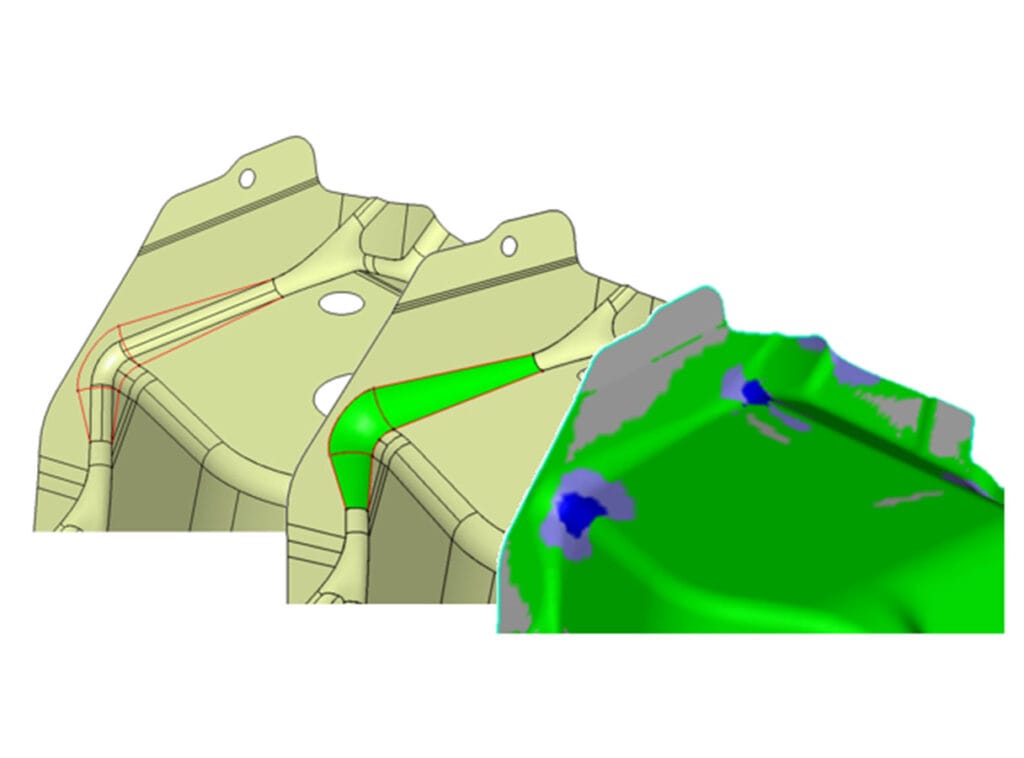
FTI CATSTAMP enables users to quickly and easily evaluate part and process feasibility as well as determine blank shape and spring back. It identifies formability problems (splits/wrinkles) enabling users to implement design changes earlier in the product life cycle, saving time and money. Before releasing data to tooling, engineers run FTI CATSTAMP to assess formability risks and optimize material usage. It considers component or tool geometry and accounts for material properties, friction, binder, addendum, blank holder force, pad pressure, draw-beads, and tailor-welded blanks.
Features in FTI CATSTAMP


Design for Manufacturing (DFM) Techniques
DFM techniques are used on Class B and C Body-In-White (BIW) components. Product designers can evaluate several forming scenarios. Engineers can predict formability (splits/wrinkles) spring back issues to reduce ECOs, develop blank size, determine material utilisation, weight, with time saving outputs in Excel, PowerPoint or customised reports.


Key Product Requirement (KPR)
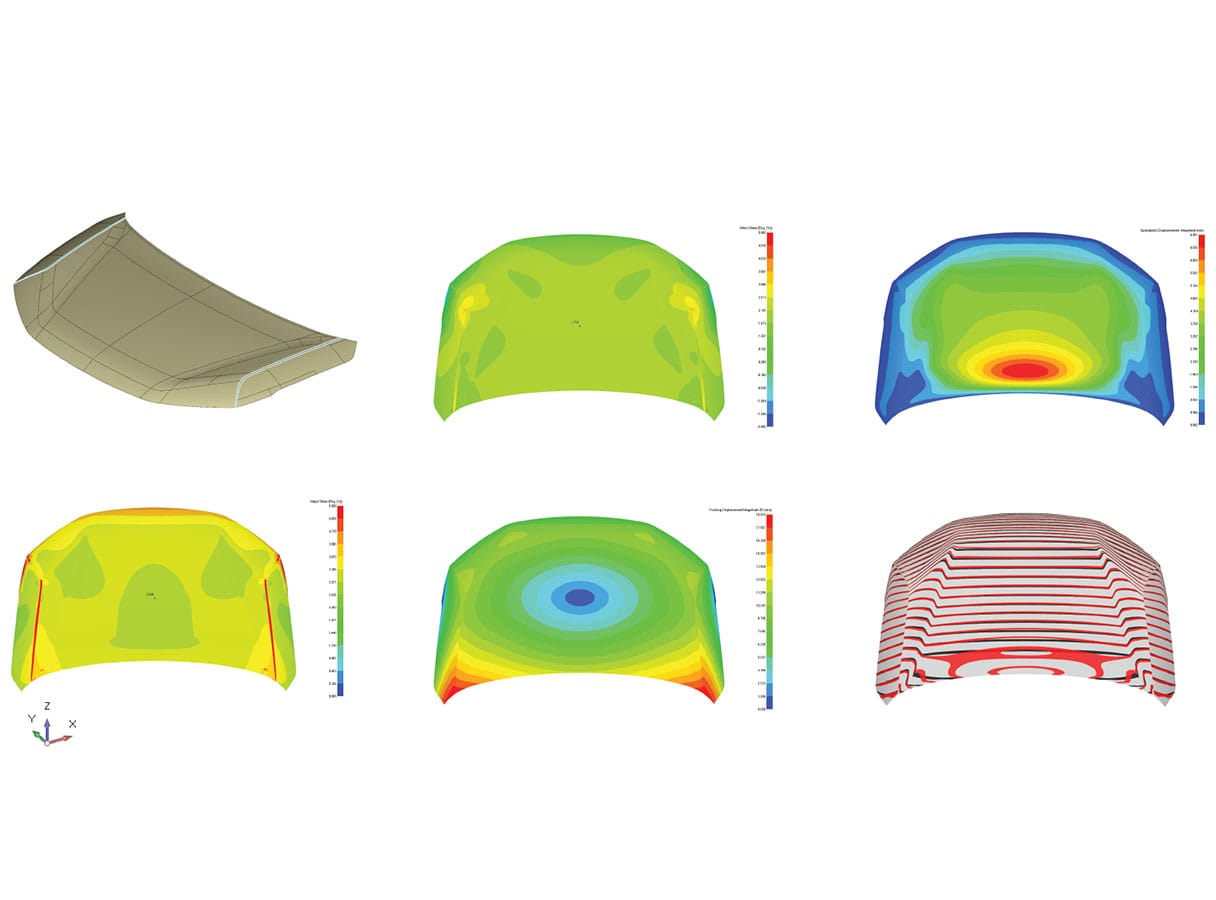
KPR techniques are used at automotive OEMs to review Class A surfaces while the clay models are still in styling. The KPR analysis addresses issues such as cosmetic quality, surface distortion for mating surfaces, dent resistance, continuity of reflect lines, continuity of features, slip lines, and thinning. KPRs significantly affect the product’s quality, safety, and compliance with regulations.


Embedded Solution
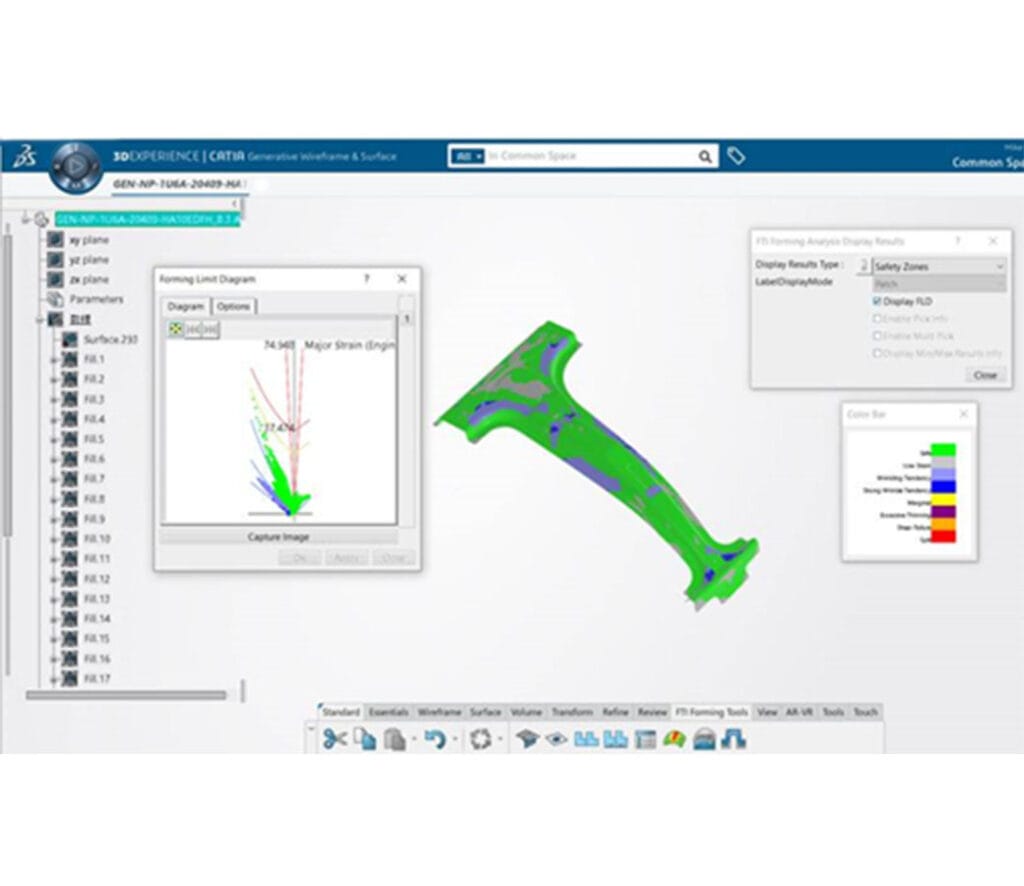
FTI CATSTAMP V6 is a fully embedded application within the 3D Experience native environment and uses Hexagon’s proprietary Coupled Hybrid Inverse (CHI) solver for fast and accurate forming feasibility analysis. Design engineers strive to design a part free from formability issues (splits/wrinkles) and eliminate costly ECOs during the tooling design and build.
Features in FTI CATSTAMP
- Scientific physics-based approach identifies formability issues at product design stage reducing ECOs
- dentifies product design changes that improve quality, material utilisation, and reduces weight and costs for optimal material usage
- Develops minimum blank size and ensures no blank overlap
- Accurately identifies splits and wrinkles using Forming Limit Diagram (FLD), Safety Zone in addition to Thickness Strain, Major/ Minor Strain, etc.
- Calculates springback to predict issues for tooling, and provides information for Tolerance Negotiation or to add design features to reduce springback.
- Reports summarise product design issues and material utilisation, providing first level communication between product and tooling suppliers (internal/external).