

• Português
  • English

Simufact Welding

Special weld structure software for virtual tests and process design for the optimisation of assemblies. Robustly simulate complex multi-station fixturing and assembly of complex assemblies with hundreds of joints. Perform a “virtual tryout” before the first part is fabricated.

Welding Process Simulation Software

Simufact Welding is used to model and optimise a variety of thermal joining processes, taking into account the welding sequence and fixture.

One of the biggest challenges in welding is the thermal deformations or residual stresses of the entire assembly that occur after a non-optimised welding and clamping process. 

HEXAGON

Spot-Weld-Seam-Weld-Vibration-fatigue-analysis-in-time-frequency-domain-Simufact-Welding-ESI-Sysweld-Abaqus-Ansys-Enteknograte-1536x857

Exactly the right welding process you need

Laser- and Electron Beam Welding processes are simulated to predict the local distribution of residual stress, strain and distortion.

Simufact Welding takes into account the specifics of a Laser or Electron Beam heat source. This complements the extensive capabilities that are offered for simulating arc welding processes and enables an accurate prediction of any physical Laser and Beam welding process.

pda-workflow-05-PVT-graph-collection-1000

One of the key challenges for metal binder jetting manufacturers is to predict changes during the sintering process. Simufact Additive supports manufacturers to simulate the shrinkage considering amongst others the thermal strain, friction and the gravity during sintering

  • Predict sintering-induced stress in advance and indicate where defects might occur
  • Compensate for distortion automatically
  • Dilatometry based densification prediction
  • Can be expanded to other sinter based additive processes like MIM and CMF  
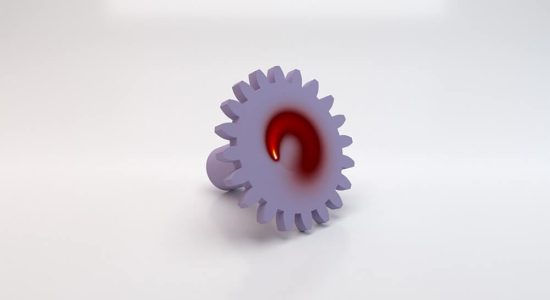
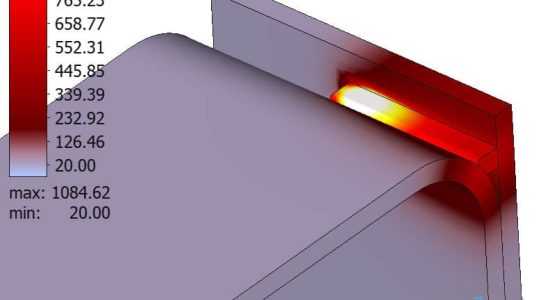
Rendering Simufact Welding Gearshaft SIM Temperature

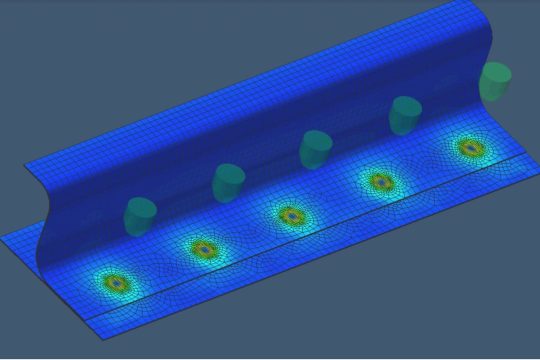
With Simufact Welding, Resistance Spot Welding processes are simulated with a high accuracy. The impact of multiple parameters like spot sequence, welding process parameters (force, current, time) and fixturing/clamping strategy on the weld structure is predicted.

The flexible configuration of the simulation in different modes (thermomechanical, mechanical with electrode movement and simplified) enables a fast simulation for complex assemblies.

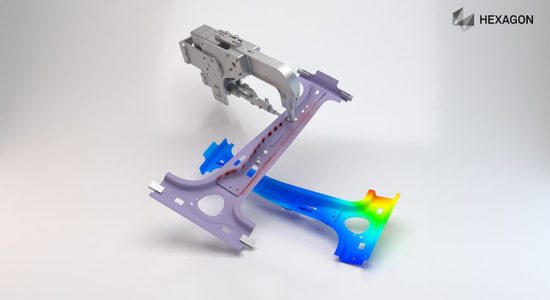
Rendering Simufact Welding B Pillar SIM

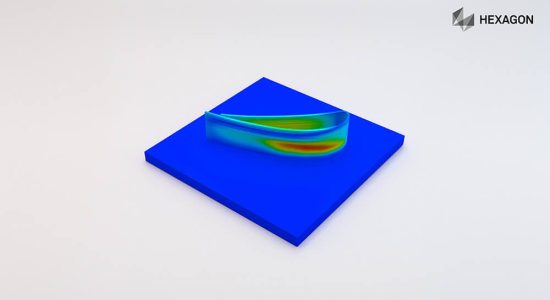
Simufact Welding enables the quick and efficient setup  of robust laser metal deposition (DED) models in order to calculate and evaluate for stress, strain, distortion, thermal history, and hot spots during manufacturing and post processing.

Common robot programming such as the G-Code can be utilized – This allows users to simply import existing tool paths instead of defining weld paths manually.

Rendering Simufact Welding DED Turbine SIM Displacement

Brazing is a thermal process that applies hot soldering material to join parts. The Simufact Welding Brazing module takes care of the specifics of this process: the heat input for example is limited to the soldering material only – the soldering material itself is modelled by fillets.

Brazing simulations can be defined using both conventional and beam heat sources, or a combination of them.

Simufact Welding brazing

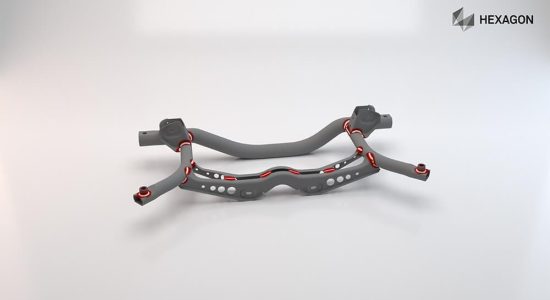
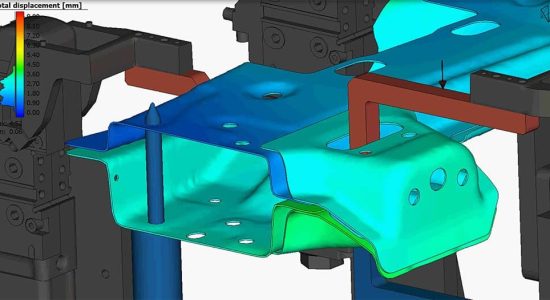
Virtual Clamping enables to predict the exact geometry for parts and assembled structures. Simufact Welding simulates the behavior of parts as they are clamped and welded in their designated (for example: vehicle) coordinates – This dramatically reduces the need for prototypes or tryouts.

Stress relieving reduces residual stresses in the assembly after welding. Usually the application of this heat treatment method involves controlled heating of the assembly, a certain holding period at elevated  temperature as well as controlled cooling – The simulation enables virtual tryout to achieve the best possible heat treatment process

Virtual Clamping Displacement

Features in Simufact Welding

Process oriented, all-in-one solution

Simufact Welding is not only easy to use due to its process-oriented and intuitive user interface, but also includes comprehensive functionality for all simulation steps from modeling to calculation and the evaluation of results.

Speed and accuracy of spot-welding simulation

Besides the full transient thermal-mechanical simulation of spot-welding processes, a solution for pure mechanical simulation is implemented, which allows the user up to 30x faster simulation speed.

Reduce modelling times by 50% to 90% + compared to other welding software on the market

Simufact Welding is designed to fit the needs of process engineers rather than CAE specialists. The excellent usability enables a significant reduction of modelling times.

Robust handling of large multi-station assemblies

Simulate the welding of two components or even complete assemblies

Semi-automated meshing

Simply set the element size and create refinement boxes for particularly important areas if needed, click "Create Mesh" and the meshing will be performed automatically.

Your benefits with Simufact Welding

Design and optimise your welding process

Determine the optimal weld sequence and parameters, as well as clamping and unclamping concepts, to minimise thermal distortions and residual stresses and ensure a robust welding process. Identify and eliminate potential welding defects, such as hot cracks. Investigate material behavior during welding, such as phase transformation.

Simplicity

No CAE expert knowledge required as the software solution is designed to be user-friendly, intuitive and process-oriented.

Sustainability

Save material, time and money by replacing expensive and time-consuming physical tests with virtual tests.

Dr. Amin S. Azar
Dr. Amin S. AzarHead of Additive Manufacturing, Effe Induction AS
"Simufact Welding helps us find relationship between the applied tool path and the cooling rate, phase transformation, residual stresses and other factors that can determine the quality of the delivered materials."
Verena Uhl
Verena UhlHead of Additive Manufacturing, pro-beam additive GmbH
"For us, the accuracy of the simulation results as well as affordable calculation time are mandatory. The newly developed Advanced Thermal Cycle (ATC) approach looks very promising as it has high accuracy but shorter computation time. We will test the new approach in future projects."

Talk to a specialist

Talk to those who truly understand.