

• Português
  • English

Simufact Additive

Simulation software for process design, virtual testing and optimisation of metal-based additive manufacturing. To prevent costly defects, Simufact Additive enables the easy-to-use virtual simulation of the entire production process: From Support structure generation and removal to heat treatment, machining and more.

HEXAGON

Accurately simulate metal AM processes

Simufact Additive is a scalable software solution for the simulation of metal-based additive manufacturing processes which focuses on laser powder bed fusion (L- PBF) and metal binder jetting (MBJ) processes.

SIMUFACT ADDITIVE HEXAGON

Exactly the right metal AM process you need

Simufact Additive focuses on quick simulation of Laser Powder Bed Fusion including Selective Laser Melting (SLM), Direct Metal Laser Sintering (DMLS), LaserCUSING® and similar processes and reduces the need for multiple product iterations to produce 3D parts “first-time-right”.

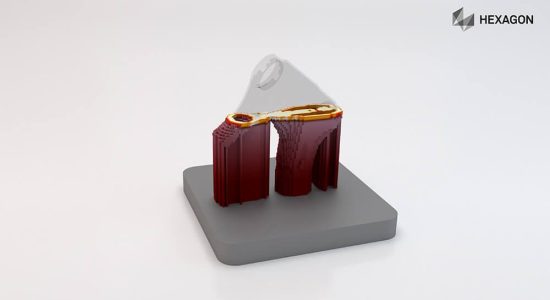
  • Prepare parts for build by orienting, identifying risks, estimating costs and generating supports
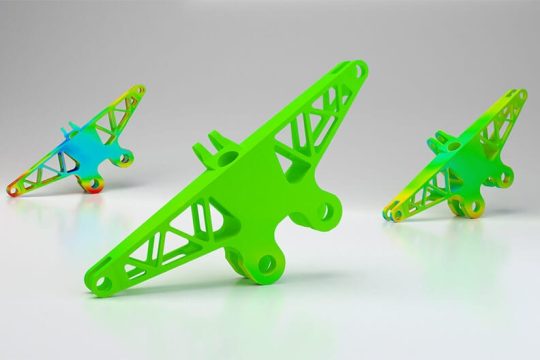
  • Predict distortions, residual stresses and thermal effects via mechanical and thermal analysis
  • Compensate for distortions automatically and support optimization
  • Generate build files after slicing your parts  
SIMUFACT ADDITIVE HEXAGON

One of the key challenges for metal binder jetting manufacturers is to predict changes during the sintering process. Simufact Additive supports manufacturers to simulate the shrinkage considering amongst others the thermal strain, friction and the gravity during sintering

  • Predict sintering-induced stress in advance and indicate where defects might occur
  • Compensate for distortion automatically
  • Dilatometry based densification prediction
  • Can be expanded to other sinter based additive processes like MIM and CMF  
SIMUFACT ADDITIVE HEXAGON

PBF process and defect analysis (PDA)

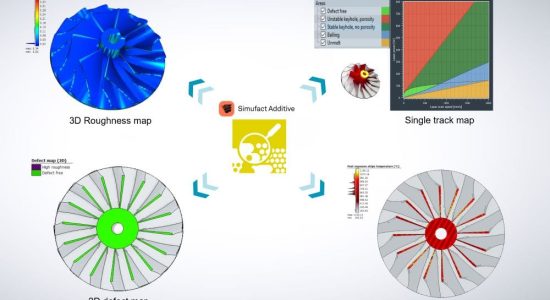
Simufact Additive’s Defect Prediction Solution revolutionizes Metal Laser Powder Bed Fusion with a multi-scale approach. Swiftly predict defects and optimize local parameters, all within full-scale geometries. This hybrid analytical-numerical model-based module enables rapid thermal history and defect prediction at individual scan vector and powder layer levels. Predict and mitigate risks of keyholing, lack of fusion, balling up, and surface roughness.

SIMUFACT ADDITIVE HEXAGON

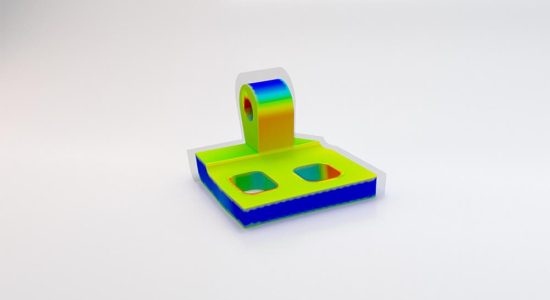
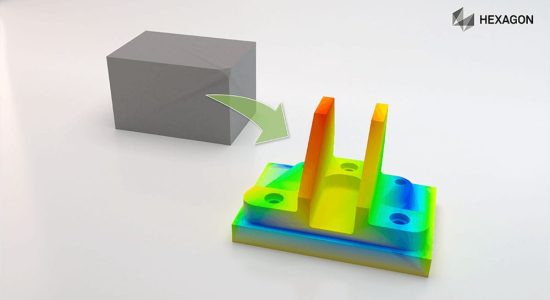
Simufact Additive’s machining module emerges as a specialized add-on to your additive manufacturing workflow. This module is specifically crafted to simulate the stress-relief phase of a part by removing material.

  • An invaluable insight into how the component would behave.
  • Engage in controlled, precision-based machining and ensure the structural integrity of your final product.
  • Witness the seamless integration of additive manufacturing and subsequent machining stages, optimizing both your process and product quality. 
SIMUFACT ADDITIVE HEXAGON

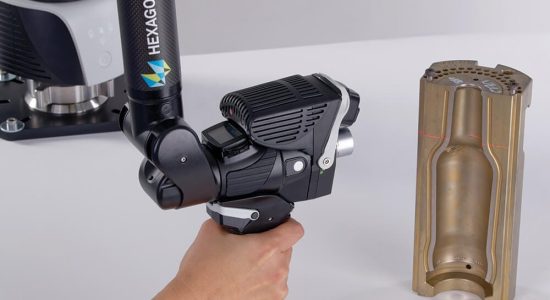
The Geometry Inspection Module lets you compare a scanned body with its corresponding CAD file, swiftly calculating surface deviation and generating a compensated geometry.

  • Reduces the deviation of the printed part by skillfully calculating a meaningful surface deviation comparison between the scanned component and its ‘nominal CAD’ simulation.
  • With multiple reference geometries importable, easy selection, and part compensation options, this module is your go-to solution for enhancing accuracy in your additive manufacturing process.  
SIMUFACT ADDITIVE HEXAGON

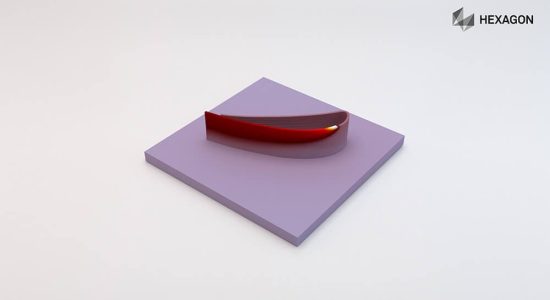
Hexagon offers a dedicated solution specifically catered to the Directed Energy Deposition (DED) process in additive manufacturing.

Simufact Welding is specifically engineered to simulate DED processes with high precision. It provides insightful predictions of distortion and residual stresses, promoting optimized design strategies.

  • Detailed analyses of temperature fields and identifies potential issues.
  • User-friendly interface and a wealth of robust features, Simufact’s solution streamlines the intricacies of DED, ensuring superior manufacturing outcome.
SIMUFACT ADDITIVE HEXAGON

Features in Simufact Additive

Quick build setup incl. support structures and optimized orientation

Simufact Additive has an intuitive graphical user interface (GUI) that is exceptionally user-friendly. The flexible GUI concept enables machine- and application-specific dialogs that are oriented to the real work process. This makes it super quick and easy to setup the build model, including the support structure generation. And assisted by an orientation tool, the user can determine the best building orientation!

Easily create stable simulation model even as a non-expert

Successfully running Simufact Additive does not require expert knowledge. The workflow-oriented user interface guides the user efficiently through the simulation process preparation. A growing number of automation and assistance functions support the user in creating a stable simulation model. It accurately calculates the print job, reveals any production issues and helps the user to produce AM components with repeatable dimensional accuracy first time right.

Precisely predict distortion and auto compensate geometry for it

Simufact Additive is based on the proven MARC solver technology from Hexagon. Marc is a leading solution for nonlinear numerical simulations. We have developed and adapted Marc specifically for use in additive manufacturing. Based on this, Simufact Additive can simulate the distortion within the part and pre-deform the component automatically. This ensures a high part accuracy right from the first print job.

Identify and mitigate manufacturing risks

From an extremely fast mechanical method to a full thermal-mechanical coupled transient analysis with high accuracy of simulation results, Simufact Additive can simulate your build job. This helps to calculate and minimize residual stresses, identify cold/hot spots by thermal or thermo-mechanical simulation, determine manufacturing problems, (recoater contact, part defects etc) as well as simulate the influence of several components in the build space.

PBF process and defect analysis (PDA)

Rich feature designed to pinpoint the most suitable parameters for your additive manufacturing process. Users can explore a vast parameter space, where the simulation identifies an optimum combination. Whether it's adjusting laser power, scan speed, or temperature settings, this utility facilitates detailed testing without the need for physical trial and error. Users can predict which parameters produce the highest quality prints, reduce manufacturing errors, and maximize efficiency, enhancing the overall performance of their additive manufacturing operations.

Directly create manufacturing job data for L-PBF printers

Simufact is building partnerships with 3D printing machine suppliers aiming at an integrated approach which combines AM simulation software with vendor-specific 3D printers / resp. their build preparation software. The goal is a fully-coupled simulation-based optimization providing the build file for the best configuration. This approach is an important component of our 'right-first-time' strategy.

CAD export

Simufact Additive's CAD Export feature transforms the final mesh into a deformed CAD geometry, ready for export. This capability facilitates a direct comparison between the deformed CAD model and the scanned geometry, creating an effective way to assess and validate the results. It's a powerful tool for ensuring your final product aligns closely with your initial design expectations.

Print your 3D AM parts first-time-right with Simufact Additive

Design and optimise your metal AM process:

Optimise the build-up orientation and the support structuresCompensate distortion automatically to print the part as-designedIndicate criteria-based part failures, e.g. recoater crashes or risk of cracks

Costing

Estimate your costs for single parts and the entire printing job.

Simplicity

No expert knowledge required as the software solution is designed to be user-friendly, intuitive and process-oriented.

Sustainability

Save material, time and money by replacing expensive and time-consuming physical tests with virtual tests.

Research Projects

Software solution for compensating sinter distortion of MBJ-printed parts

Funded by Hamburg’s IFB, Simufact developed an enhanced geometrical pre-compensation procedure, which allows to modify the geometry of the green part in such a way that the geometry in sintered state matches the desired shape of the part. The calibration is based on simple tests, which do not require specific testing equipment The developed procedures have been implemented and are available to all users.

High-variance medical products through combination of subtractive and additive manufacturing technologies (MeSATech)

Economic, efficient and resource-saving Manufacture of near-to-patient knee implants by combining conventional and additive manufacturing processes: This has been addressed by a consortium where Simufact supported the project with development of enhanced procedures for the analysis of hybrid additive manufacturing and subsequent machining. The developments have meanwhile been released in the commercial version of Simufact Additive.
Radhakrishnaiah Bathina
Radhakrishnaiah BathinaTechnical specialist, Bosch India
"Additive manufacturing simulation methods helped in achieving a lightweight structure, distortion-free model, without residual stresses, which is more helpful to the AM designers to print the parts physically first time right."

Dr. Amin S. Azar
Dr. Amin S. AzarHead of Additive Manufacturing, Effe Induction AS
"Simufact Welding helps us find relationship between the applied tool path and the cooling rate, phase transformation, residual stresses and other factors that can determine the quality of the delivered materials."
Verena Uhl
Verena UhlHead of Additive Manufacturing, pro-beam additive GmbH
"For us, the accuracy of the simulation results as well as affordable calculation time are mandatory. The newly developed Advanced Thermal Cycle (ATC) approach looks very promising as it has high accuracy but shorter computation time. We will test the new approach in future projects."
