


AI at PTC: Turning Product Data Into Product-Driven Intelligence
Product data isn’t new—but it’s taking on a whole new meaning as the backbone of AI-driven transformation for manufacturers and product companies.
AI that you can trust and scale for real value
PTC’s enterprise AI strategy enables scalable, secure, and trustworthy AI that delivers measurable value without requiring customers to overhaul their infrastructure or relinquish control of their data. Built on a trusted product data foundation, and embedded in the tools and workflows customers already use every day—PTC’s AI empowers customers to unlock more value across the entire product lifecycle.
Acceleration in R&D design and validation
Speeding up product development, generating requirements and tests, optimizing CAD designs, and auto linking requirements and parts. Source: McKinsey
Increase in worker productivity
Leading to reduced service delivery costs, fewer errors, less defects, and higher quality. Source: McKinsey
Monthly savings per factory
AI increased operational efficiencies from optimizing production schedules, bottleneck identification, root cause analysis, and chat-based reporting and insights. Source: McKinsey
Turning product complexity into a competitive advantage
Manufacturers and product companies are leaning into AI to turn data into action, speed decisions, and stay ahead of disruption. AI fuels the Intelligent Product Lifecycle, powering smarter operations and accelerating innovation across every stage from design to service.
Design smarter and faster with AI-powered CAD
PTC Creo integrates AI to automate tasks, boost productivity, reduce errors, and empower engineers to design faster, smarter, and with higher quality.
Accelerate innovation with AI-driven PLM workflows
Windchill AI embeds generative and agentic AI in PLM to automate workflows, unlock insights, and boost productivity—accelerating innovation and decisions.
Streamline agile development with AI in ALM
Codebeamer AI embeds generative AI to streamline requirements and agile management—ingesting docs, improving quality, and accelerating product development.
Boost field service execution with GenAI
ServiceMax AI embeds GenAI to boost service execution—improving readiness, speeding resolution, capturing expertise, and uncovering new revenue opportunities.
Optimize service supply chains with proven AI
Servigistics leverages 20+ years of AI and machine learning to optimize service supply chains—boosting R&D, support efficiency, forecasting, and overall productivity.
Design smarter and faster with AI-powered CAD
PTC Creo integrates AI to automate tasks, boost productivity, reduce errors, and empower engineers to design faster, smarter, and with higher quality.
Accelerate innovation with AI-driven PLM workflows
Windchill AI embeds generative and agentic AI in PLM to automate workflows, unlock insights, and boost productivity—accelerating innovation and decisions.
Streamline agile development with AI in ALM
Codebeamer AI embeds generative AI to streamline requirements and agile management—ingesting docs, improving quality, and accelerating product development.
Boost field service execution with GenAI
ServiceMax AI embeds GenAI to boost service execution—improving readiness, speeding resolution, capturing expertise, and uncovering new revenue opportunities.
Optimize service supply chains with proven AI
Servigistics leverages 20+ years of AI and machine learning to optimize service supply chains—boosting R&D, support efficiency, forecasting, and overall productivity.


A strong product data foundation fuels AI—and scales for real value
“By embedding AI into existing product workflows, PTC customers are turning product data into decisions, and decisions into innovation. Those who fail to act risk falling behind in a rapidly evolving market.”
Francois Lamy, SVP, AI Center of Excellence
Embedded AI: Advise, Assist, Automate
GenAI enables a new class of software—AI agents—built directly into the tools you use every day. These agents can understand context, make decisions, and carry out tasks to help you work smarter and faster.
AI agents provide instant access to knowledge—answering questions, summarizing content, and retrieving relevant information. They surface insights within workflows, helping users make informed decisions quickly and confidently.

AI agents that support users by completing steps within workflows—streamlining tasks, improving efficiency, and boosting productivity. They act as intelligent partners, helping teams work smarter without disrupting existing processes.

AI agents execute entire workflows with minimal human input—connecting systems, monitoring data, and driving outcomes autonomously. This enables faster decisions, reduced manual effort, and scalable transformation across operations.
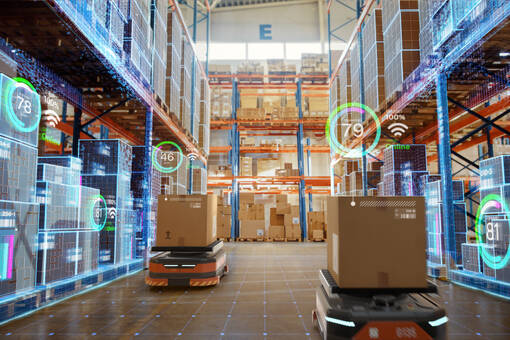
AI that you can trust and scale for real value
PTC’s enterprise AI strategy enables scalable, secure, and trustworthy AI that delivers measurable value without requiring customers to overhaul their infrastructure or relinquish control of their data. Built on a trusted product data foundation, and embedded in the tools and workflows customers already use every day—PTC’s AI empowers customers to unlock more value across the entire product lifecycle.
Valuable
Solve customer problems with AI and invest in practical applications.
Scalable
Ensure AI can be applied at scale across the enterprise, within our technologies, and our customers’ product lifecycles.
Responsible
Lead with transparency and ensure ethical AI application. Privacy, security, IP protection, and data governance are of the utmost importance.
AI governance
PTC’s formal AI governance framework guides responsible innovation—overseeing implementation across risk, compliance, privacy, and IP protection. Built on secure, structured product data, AI is embedded into enterprise workflows to ensure transparency, accountability, and alignment with customer values—turning product data into trusted, scalable intelligence.

AI frequently asked questions (FAQs)
What is generative AI?
Generative AI is a type of artificial intelligence that creates new content—such as text, images, code, designs, or music—based on patterns learned from large datasets. Unlike traditional AI, which focuses on analyzing or predicting, generative AI produces original outputs that mimic human creativity. It uses models like large language models (LLMs) and generative adversarial networks (GANs) to generate realistic, context-aware results. This technology is reshaping industries by accelerating innovation, automating tasks, and enabling new forms of creativity.
What are AI agents?
AI agents are software programs that can perceive their environment, reason, and take actions to achieve specific goals. They use AI techniques like natural language processing, machine learning, and automation to interact with data, systems, and people. Unlike static tools, AI agents can adapt, learn, and operate autonomously or collaboratively—handling tasks such as answering questions, automating workflows, or making recommendations. This makes them powerful for improving efficiency, decision-making, and user experiences across industries.
What differentiates PTC AI from others in the market?
PTC AI stands out by embedding generative AI directly into enterprise tools like Creo, Windchill, Codebeamer, and ServiceMax, making it context-aware and workflow-ready. It leverages trusted product data, is tailored for engineers and product teams, and delivers enterprise-grade, scalable solutions—helping customers move from pilot to full production and achieve measurable business value.
Is AI safe and secure for enterprise use?
AI can be safe and secure for enterprise use when implemented with proper governance, data privacy, and access controls. Trusted AI relies on high-quality, internal data rather than public sources, follows compliance and ethical guidelines, and is integrated into enterprise systems with monitoring and auditing—minimizing risk while delivering reliable, explainable, and actionable insights.
What is the difference between AI, machine learning, and generative AI?
Artificial intelligence, or AI, refers to machines performing tasks that typically require human intelligence. Machine learning is a subset of AI where systems learn patterns from data to make predictions or decisions. Generative AI is a type of machine learning that creates new content—like text, images, or designs—based on learned patterns, going beyond analysis to actively generate novel outputs.
