


Optimization of Structural Simulations in CAE through Design of Experiments Techniques Integrated with Monte Carlo Simulation
LESSA, Leonardo. OMC Group. Campinas (SP). April 2026.
Abstract
The advancement of Computer-Aided Engineering (CAE) tools has allowed for significant evolution in virtual product development, especially in structural analyses based on the Finite Element Method (FEM). However, the increasing complexity of computational models results in high processing costs, long simulation times, and increased computational effort required to evaluate multiple load cases. In this context, this work proposes a methodology integrating Design of Experiments (DOE) techniques and Monte Carlo Simulation with the objective of reducing the number of necessary structural simulations and accelerating the virtual analysis process. The approach utilizes DOE for the strategic selection of relevant factors and the construction of statistical response surfaces, while Monte Carlo Simulation is employed to probabilistically explore thousands of loading combinations and automatically identify critical structural failure cases. The results demonstrate a high reduction in computational cost, increased efficiency in the virtual engineering process, and significant acceleration of the product development cycle.
1. Introduction
Increasing industrial competitiveness demands faster development cycles, cost reduction, and greater structural reliability of products. In this scenario, Computer-Aided Engineering (CAE) tools have become fundamental for the virtual validation of mechanical and structural projects. Structural analyses performed via the Finite Element Method (FEM) make it possible to predict:
- Mechanical stresses;
- Deformations;
- Displacements;
- Fatigue;
- Buckling;
- Dynamic behavior.
However, modern structural models often feature:
- Complex geometries;
- Multiple materials;
- Nonlinearities;
- Large number of loading conditions;
- Hundreds of design variables.
This high complexity exponentially increases the number of simulations required for a complete evaluation of the design space.
The total number of possible combinations can be represented by:
N = L k
Where:
- N= total number of experiments
- L= number of variables
- k = quantity of factors
In real industrial problems, this number can reach tens of thousands of computational analyses.
Given this problem, DOE techniques associated with Monte Carlo Simulation emerge as a robust approach to:
- Reduce the number of simulations;
- Identify critical variables;
- Predict extreme scenarios;
- Accelerate CAE analyses;
- Optimize structural load cases.
2. Theoretical Foundation
2.1 Computer-Aided Engineering (CAE)
CAE consists of using computational models to predict the physical behavior of engineering systems.
Structural analyses are largely based on the Finite Element Method (FEM), whose mathematical formulation discretizes the structural domain into small interconnected elements.
The basic constitutive relation of linear elasticity can be represented by:
σ = Ε ε
Where:
- σ = stress
- Ε = modulus of elasticity
- ε = strain
Despite the high precision of CAE models, excessive mesh refinement and the multiplicity of operational conditions make the computational process extremely costly.
2.2 Design of Experiments (DOE)
DOE is a statistical methodology focused on the efficient planning of experiments.
Its main objectives are:
- Identify relevant factors;
- Reduce redundancies;
- Maximize statistical information;
- Minimize the number of experiments.
Main methods used include:
- Full Factorial;
- Fractional Factorial;
- Taguchi;
- Response Surface Methodology (RSM);
- Central Composite Design (CCD).
Factor Definition
↓
Experimental Planning
↓
Execution of CAE Simulations
↓
Statistical Analysis
↓
Construction of Response Surface
↓
Prediction of Results
Figure 1: DOE Flow Applied to CAE
2.3 Monte Carlo Simulation
Monte Carlo Simulation is a probabilistic technique used to model uncertainties in complex systems.
- The methodology consists of:
- Generating thousands of random scenarios;
- Applying probabilistic distributions;
- Estimating statistical responses;
- Predicting extreme events.
The normal distribution is frequently used:
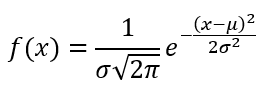
Where:
- µ = mean
- σ = standard deviation
In the CAE context, Monte Carlo allows:
- predicting failures;
- identifying critical load cases;
- evaluating structural robustness;
- eliminating unnecessary simulations.
3. Proposed Methodology
The integrated DOE + Monte Carlo methodology was structured into six main stages.
3.1 Definition of Structural Factors
The factors analyzed were:
| Factor | Description | Type |
| A | Load Magnitude | Continuous |
| B | Load Direction | Angular |
| C | Thickness | Continuous |
| D | Material | Discrete |
| E | Mesh Size | Discrete |
| F | Boundary Condition | Categorical |
Response variables included:
- maximum Von Mises stress;
- maximum displacement;
- safety factor;
- structural mass;
- computational time.
3.2 DOE Planning
Initially, a reduced factorial design was applied.
- Without DOE:
N = 56 = 15625
- With Fractional DOE:
Total Simulations
- ▊▊▊▊▊▊▊▊▊▊▊▊ Conventional (15625)
- ▊▊ DOE (64)
Reduction: Superior to 99%.
3.3 Construction of the Response Surface
The results from the initial simulations were used to construct approximate mathematical models.
The general regression model used was:
Y = β0 + ∑ βi xi + ∑ βij xi xj + ∑ βii xi2 + ε
This model allows for predicting structural responses without the need for new full CAE analyses.
3.4 Integration with Monte Carlo
After calibrating the DOE model, thousands of probabilistic samples were executed using Monte Carlo.
Each variable received a specific statistical distribution:
| Variable | Distribution |
| Load | Normal |
| Thickness | Uniform |
| Torque | Weibull |
| Temperature | Log-normal |
This process generated thousands of combinations virtually without the need for a full FEM solution.
4. Results and Discussion
The results demonstrated a significant reduction in computational effort.
The methodology allowed:
- drastically reducing simulations;
- automatically predicting critical load cases;
- identifying failure regions;
- increasing computational efficiency.
Processing Time Comparison:
- ▊▊▊▊▊▊▊▊▊▊▊▊ Conventional (120h)
- ▊▊ DOE +Monte Carlo (8h)
Approximate Reduction: 93% in computational time.
Figure 2 — Comparison of Computational Time
Influence on Results
- ▊▊▊▊▊▊▊▊▊▊ Applied Load
- ▊▊▊▊▊▊▊▊ Thickness
- ▊▊▊▊▊▊ Material
- ▊▊▊▊ Mesh
- ▊▊ Temperature
It was observed that load magnitude and structural thickness were the most relevant factors for maximum stresses.
Figure 3 — Sensitivity of Factors
Identification in the Results
- ▊▊▊▊▊▊▊▊▊▊▊▊ Safe Region
- ▊▊▊▊▊▊ Critical Region
- ▊▊ Structural Failure
Monte Carlo simulation allowed for the automatic location of extreme scenarios, rare combinations, and regions of structural instability.
Figure 4 — Automatic Load Case Identification
5. Conclusion
The integration of Design of Experiments (DOE) and Monte Carlo Simulation demonstrated high potential for optimizing structural analyses in CAE environments. The main benefits observed were:
- Reduction of over 90% in computational time;
- Significant decrease in the number of simulations;
- Automatic identification of critical load cases;
- Increased efficiency in virtual development;
- Reduced computational cost.
The methodology proved particularly efficient for industrial applications involving:
- complex structures;
- multiple variables;
- a high number of operational scenarios.
Furthermore, the construction of statistical response surfaces allowed for the replacement of a large part of traditional simulations with approximate mathematical models, while maintaining high structural reliability.

